This is a companion to my Medium reflection about the forces that remain after a political leader leaves the stage.
Donald Trump did not create every grievance, conviction, ambition, or ideological current that became the MAGA movement. He recognized a wave of populist sentiment, attached himself to it, amplified it, and rode it into power.
But populism is only the visible part of the movement.
Beneath the slogans, rallies, personalities, and elections are people and institutions with money, ideas, relationships, policy proposals, personnel lists, business interests, and long-term plans.
That brings me to two sets of questions:
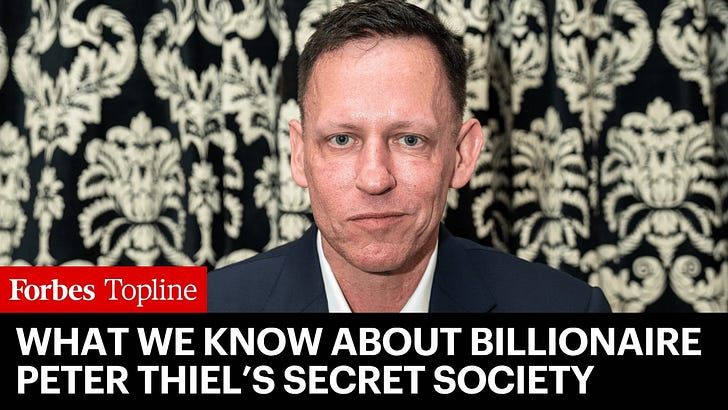
Who is Peter Thiel, and what strings—if any—is he pulling behind the scenes?
And:
How has the Heritage Foundation influenced MAGA while remaining a separate institution from the MAGA movement and the Trump campaign?
These can become conspiratorial questions if we begin by assuming that one secret mastermind controls everything.
That is not my assumption.
Political influence seldom works through one person sitting in a dark room and issuing orders. It usually operates through overlapping networks of donors, investors, candidates, think tanks, corporations, media platforms, advocacy organizations, personal relationships, and government officials.
The “strings” are not always commands. They may be:
Money that launches a candidate
Access that opens doors
Relationships that create trust
Institutions that develop future leaders
Policy papers that become executive orders
Personnel recommendations that determine who governs
Technologies that expand what government can do
Private gatherings where powerful people meet one another
Some of this happens privately. Much of it happens in plain sight—if we are willing to look beyond election-year speeches.
Peter Thiel and the Heritage Foundation represent two different forms of durable political influence.
Thiel represents the power of wealth, technology, investment, candidate development, and elite networks.
Heritage represents institutional power: research, policy development, legal theory, personnel preparation, and plans for governing.
Neither one completely controls MAGA. Neither one created all the forces that produced it. But both can help shape what happens after populist energy delivers political power.
That is where I want to look more deeply.
I invite you to explore more in the subscriber section.
Read the companion essay on Medium
What Remains After the Leader Is Gone? establishes the larger argument behind this investigation: political personalities and populist movements may change, but ideology, institutional power, money, influence, and self-interest often remain.
Read that foundational reflection before—or alongside—this deeper look below the political waterline.